Osteoporosis

Osteoporosis (thinning bones) is one of the most dreaded diseases of women, and with just cause.  Like a silent killer it sneaks up on its victim without symptoms, until finally it becomes a potentially fatal disease. About 30 million Americans suffer from osteoporosis, 80% of whom are women.   In fact, in the United States nearly 50 percent of all women between the ages of forty-five and seventy suffer from some degree of osteoporosis.  About a quarter of these will eventually go on to have a hip fracture later in life, many of whom will die of complications related to the fracture.  In fact, the lifetime risk of death from a broken hip for a 55 year old woman rivals the death risk from breast cancer.  The ravages of osteoporosis are not confined to broken hips however.  Thinning bones also result in other fractures, as well as collapsed vertebrae, disfigurement, disability, and chronic pain. Overall osteoporosis results in an $18 billion price tag for the American health care system.

So why is this becoming such an epidemic?  As with many other common diseases, the modern American diet,  sedentary lifestyle, and stress have a lot to do with it.  In some less developed cultures, osteoporosis is actually quite  rare. Our high sugar, processed food, fast food diets often don’t have the vitamins and minerals needed to build new bone. Also, we don’t get out in the sun as much as we used to. This creates a lack of vitamin D, which is necessary for building  healthy bones.   Weight bearing exercise also stimulates bone strengthening, but more and more, we have become a sedentary society.  Finally, our body reacts to this stressed out culture we live in by raising levels of the hormone cortisol, which then results in thinning of the bones.

What actually happens in osteoporosis?  Childhood, adolescence, and early adulthood are the prime opportunities for building strong bones. Our skeletal system reaches its greatest density at about the age of thirty.  After that we start a long steady decline. With the onset of menopause, women begin an accelerated period of bone loss.  In fact white women in America tend to loose 30-40% of their bone mass between the ages of 55-70.

So who’s at risk?   Women are at greater risk than men, and caucasian women are at greater risk than African-American women.  Asian women fall somewhere in the middle. In general you’re at greater risk if you’re fair skinned and blue eyed, if you’re thin or small framed, if you smoke, if you’re sedentary, if you rarely get out doors, if you drink too much alcohol or coffee, or if you went through long term depression. You’re also at increased risk if you went through late puberty or early menopause, if you have a poor diet, if you have a history of chronic liver or kidney disease, if you took steroid drugs for an extended period of time, if you had a hysterectomy with ovariectomy, if you have a  history of anorexia or bulimia, if you’ve had a prolonged absence of menstrual periods, or if you don’t get enough calcium in your diet. Stress and a poor immune system may also contribute to bone loss.  Osteoporosis tends to run in families, so if your mom has it, you’re more likely to get it. Some drugs such as those in the Prilosec or Nexium family put the patient at significant increased risk of osteoporosis.

The key is to get tested. Ideally one should get tested with a bone density screening either before  or during perimenopause. Although the fractures don’t show up until later, it helps to get a baseline test in order to establish a trend later on.

Hormones play an important role in bone health.  In fact, the primary cause of osteoporosis is hormonal imbalances that interfere with the bone-forming cells. Estrogen prevents bone loss.  Progesterone, and to a lesser degreee, testosterone,  actually help to build new bone.  Together, progesterone and estrogen offer a powerful one-two punch against thinning bone disease. DHEA, melatonin, growth hormone, and calcitonin  also support sturdy bones.  On the other hand excessive levels of cortisol (the stress hormone), and too much thyroid can lead to bone loss. When it comes to using hormones for bone health, I prefer to use bio-identical hormones.  Artificial progestins have actually been found to cause bone thinning.

Here is a game plan to help you to keep your bones strong:

*Healthy diet

*Regular exercise (especially weight bearing)

*Stress reduction

*Targeted nutritional supplementation

*Bio-identical hormone Optimization.

The optimal bone- building diet should include foods that are rich in the building blocks of bones such as nuts, seeds, flax, soy, fish,  yogurt, broccoli, and green leafy vegetables. At the same time we should avoid excessive caffeine and alcohol, sugar, and refined grain. Eliminate soda  from your diet and reduce red meat. Keep a lid on the added salt and avoid processed foods.  Supplements should contain calcium, magnesium,  vitamin D, boron, silicon, vitamin C, strontium, and vitamin K.

Take care of your bones and they’ll carry  you  through into your happy, healthy, vibrant golden years.
Yeast Overgrowth Syndrome

“I never got better until they treated the yeast.”  I have heard this statement many times from patients suffering from various maladies such as headaches, brain fog, depression, irritable bowel, chronic sinusitis, weight gain, and fatigue. Due to the modern day world that we live in I am seeing more and more people suffering with yeast overgrowth.  Old fashioned doctors used to say that “good health starts in the gut.”  I think that they were right.

Poor gut health can manifest itself in many ways.  Ideally we have a perfect balance in our guts with good bacteria, bad bacteria, and yeast.  It is a symbiotic relationship. We can not live without our friends the “good bacteria.” Yet the modern American lifestyle tends to promote poor gut health. The standard American diet (or SAD diet) is full of sugar, simple carbs, and processed food, which is not good for the body, but which is ideal for the overgrowth of yeast.  Yeast loves to feed off of sugar.  When you combine this with the overuse of antibiotics in our society, it makes for a toxic environment in our guts, and that is often the beginning of a slippery slope to worsening health.

Chronic sinusitis is a classic example. We go to the doctor with a stuffy nose, and the standard response is to start antibiotics.  However, according to the Mayo Clinic “fungus (yeast) is the likely cause of nearly all of these problems.”  So in the long run, if we don’t treat the yeast, the antibiotics kill the bacteria, promote more yeast overgrowth and they can actually make the problem worse.

At McMinn Clinic we have Yeast Overgrowth Syndrome on our radar screen, and when appropriate we treat yeast overgrowth with a comprehensive and robust anti-fungal protocol. We have been blessed with many testimonials from our patients with stories of recovery, often after suffering with symptoms of yeast overgrowth for many years.

Call McMinn Clinic at 868-1313 and set up your appointment for a thorough evaluation for yeast overgrowth syndrome.

Grumpy Ol’ Man Syndrome


On a given day if you asked my wife, she might claim that they named the above medical syndrome after her own beloved husband. I must admit that I have my good days and bad days on the home front.  However, I take some comfort in knowing that I’m in good company. In fact, if my women patients are right, “grumpy ol’ man syndrome” has reached epidemic proportions.

The usual scenario is that the wives drag their husbands in, kicking and screaming the whole way.  Of course, the men are in complete denial and are busily hoping that Scotty will beam them up at any moment and rescue them from any event in which “feelings” are discussed.  Guys need to have just the right pretense for talking about such things.  It’s OK to ask “how’s the marriage” when you’re riding around in a golf cart with a good ol’ buddy, or out in the middle of a lake on a fishing boat.  It’s like foreplay; the only acceptable ways to engage in such conversation is if the foreplay is centered around football, golf, beer, fishing, hunting, or NASCAR.  Just to cold turkey and purposely sit down and have a talk about sensitive issues such as feelings can seem extremely unmanly and may be down right uncomfortable, even with the doctor.

Fortunately the wives are on the case big time, and they usually have the common sense to come with their strong silent types to the initial doctor’s appointment.  Although I know going into it, who is going to be the communicator, I at least show the guy enough respect to address the question directly to him. “How’s it going” I say.  “Fine,” or some other one worder is usually about all I get.  Then the truth spews forth like an Icelandic volcano from the fairer half. “He’s grumpy, sullen, irritable, moody, depressed, and he has no sex drive. He comes home after work and just crashes into his Lazyboy. He doesn’t have any energy, and he doesn’t want to do anything.  He has no interests, no get up and go, no joy in life.  He’s totally disconnected. And he’s getting fat and lazy.”

On the face of it such phrases may sound like fighting words. Instead, more often than not, he agrees with her, or through his silence and lack of argument one can assume that she is not too far from the truth. Now we’re starting to get somewhere.   Just like when you look up at the summer night sky and see the big dipper, it all comes into focus. He has “Grumpy ol’ Man Syndrome.”  Another name for this dreaded and all too common condition is “Andropause.”  At that moment, I know that I can help him.

Just like women go through menopause, men go through a similar process wherein their levels of hormones (in this case testosterone) fall to well below the acceptable range.  Also just as a woman’s menopause may have dramatic affects on her health, her mood, and her behavior, so too andropause may insidiously choke the life out of even the most macho of men.   They often become a shell of their former selves.  The men, their wives, family, friends, and co-workers all suffer the dreaded consequences of the decline in testosterone and its accompanying symptoms.

At the risk of seeming to be biased toward men, after all I personally fall into that category, I have to stand up for the guys just a bit and let them off the hook. In many instances they can’t help it.  The behavior, as I described above, is not of their choosing, but instead it is often hormonally driven. If only they had a robust and balanced hormone profile they most likely would be their usual lovable and manly selves.

True story: I had a patient in the office just recently who fit this description to a tee. His wife drug him in back about 6 months ago with the classic symptoms of “grumpy ol’ man syndrome.”  He was clinically depressed, grumpy, frail, had no libido and was starting to suffer from ED (erectile dysfunction).  We did all the appropriate lab testing and found that his testosterone was quite low. I put him on a program of hormone repletion, nutritional supplementation, and life style changes.   WOW!  He came back in for his follow-up visit and announced that he was feeling fantastic.  As he put it, his energy was “through the roof.” He could hardly believe what a difference the program had made for him. The depression was gone. Energy was better. He was exercising again. He was interested once again in sex, and interested in life in general.  His ED had magically disappeared, and he was thinking much more clearly.  He and his wife were both ecstatic. She had her beloved husband back. He had his life back, and they had their marriage back.  There is no antidepressant or any other “drug” in this world which could have achieved this outcome for this patient.

Furthermore, low testosterone and andropause can have even more dire consequences. A study published in the Archives of Internal Medicine describes an 88% increase in mortality in male veterans with low testosterone. Other published studies form reputable medical journals have linked low testosterone with poor cognitive function, Parkinson’s disease, Alzheimer’s disease, osteoporosis, hardening of the arteries, heart failure, insulin resistance, diabetes, and metabolic syndrome.  Testosterone decline may also contribute to abdominal obesity, decreasing muscle mass, joint pains, loss of self confidence, fatigue, disturbed sleep, anxiety, and excessive worry. Low testosterone is not just about muscles and libido. It is about optimal health, and even mortality.

Testosterone must be respected. Like all medications it must be used properly and must not be abused or used in excess. Testosterone replacement should never be done if it is not medically indicated.  Furthermore, the replacement program must be conducted properly with adequate monitoring to attain optimal levels, while paying attention to possible side effects. If done properly, it is safe and may be profoundly effective.  Testosterone replacement therapy is not for everybody. However, in the presence of “grumpy ol’ man syndrome” like with my patient described above, it can make a remarkable difference in the life of the patient and his partner.

Bottom line, if you suffer from “grumpy ol’ man syndrome,” get your T checked, and get it optimized.  If your loved one shows signs of this dreaded disease, drag him in and get him checked for “low T.” You’ll be glad you did.

“Good Health Starts in the Gut.”

As I reviewed the long list of initial symptoms, I was happy to hear the patient say that everything was “better, better, gone.”

Dr. McMinn:  “How is the fatigue?”

Patient: “It’s much better doctor.”

Dr. McMinn:  “How is the brain fog and anxiety?”

Patient:  “They’re also much better.”

Dr. McMinn:  “How is the diarrhea?”

Patient:  “It’s gone.”

This patient had been to doctor after doctor for her various symptoms, but it wasn’t until we addressed her gut issues that she got better.

Old fashioned country doctors used to say that “good health starts in the gut,” and as I have become an older and perhaps wiser physician, I have become abundantly convinced that they were right all along.

Other organs may be “sexier” but the gut is where wellness begins. We marvel at the processing ability of the incredible human brain, and the heart amazes us with it heroic pumping marathon. We manicure our nails, and fuss over our hair.  However, we take the lowly gut for granted, as if we’d rather not acknowledge, much less to glorify, a mere poop factory.  Yet the oft-ignored gut frequently holds the key to good health, and likewise poor gut heath may manifest in all sorts of bodily havoc.  I have seen miracle cures for many different maladies by attending to gut issues.  Seemingly unrelated diseases and symptoms such as fatigue, brain fog, headaches, rashes, asthma, arthritis, autoimmune disease, fibromyalgia, ADD, autism, sinusitis and many more health problems may be linked back to poor gut health.

Let’s take a look at some of the issues affecting gut health:

*Diet:  Let’s begin with what we put in our mouths. Certainly the MAD diet (Modern  American Diet) has not helped the situation.  It’s amazing to me that our bodies can survive the daily onslaught of junk food, processed food, transfats, sugar, and toxins as well as it does.  The term “garbage in garbage out” frequently applies to computers. However, the same principle is applicable to the human body.  We feed our bodies garbage, and yet we expect this to miraculously turn into healthy cells. Instead, our junk diets wreak a heavy toll on gut health, which then dominoes onto other bodily parts and functions.

*Stress:  This is one of the main fundamental causes of disease. Stress can take its toll on just about any body part and the gut is no exception.  Stress is often associated with issues such as Crohn’s disease, irritable bowel disease, and chronic diarrhea. Ulcers, leaky gut, cramps, poor digestion, and stomach upset.

Food Allergies and Sensitivities: The gut has the daunting challenge sifting through every single molecule we eat and of deciding what to let in, and what keep out.  That’s one reason that we call the gut “the second brain.”  To meet this challenge, approximately 70% of our immune system lies in the gut.

For millions of years our ancestors ate a “natural” diet of berries, fruits, vegetables, roots, and leaves. They killed critters and ate fish for lean protein. Now let’s fast forward to the modern American grocery store.  Most of the food we might find in the center isles may rightfully be considered by our bodies to be like a foreign body, and thus generate an immune response.  This untoward immune response may express itself in all sorts of clinical symptoms. Our food has changed drastically in a relatively short period of time, but our immune system is genetically the same as our hunter-gatherer ancestors.

Poor Digestion:  Next time you find yourself at the drug store, take a moment to walk down the isles and look at the over-the- counter medications.  You’ll find that by far, the number one item is the digestive and gastrointestinal aids. Year after year, Nexium and its acid blocking cousins are at the top of the charts in terms of prescriptions sold.  These powerful acid blockers, as well as the seemingly benign antacids like Tums, interfere with our natural digestive ability.  As such, we may not get the nutrients form our food that we need to maintain healthy cells.

Bacterial Imbalance (Dysbiosis): The human body exists in an amazing state of synergistic balance with our gut flora. Perhaps an oversimplification, but this mainly consists of  “good bacteria,” “bad bacteria,” and yeast.  We cannot survive without our “good bacteria.”  Unfortunately, we frequently kill off the good bacteria with the antibiotics that we take. Also, with the sugar ladened diets we frequently find our guts in a miserable state of yeast overgrowth.  This can result in bowel wall inflammation, and eventually “leaky gut syndrome.”  A cascade of inflammatory and immune reactions then take place which can affect the far reaches of the body, including brain, bones, skin, auto-immune disease, etc.

Similarly, parasites may add another twist to the complex milieu of bacterial flora.

A simple plan for gut health recovery involves the 4R program:  Remove, Repair, Restore, and Replace. This program is available in the integrative medical literature, and I have had great success by adopting it in my practice.

Step One:  Remove the stressors on the gut such as the drugs, alcohol, sugar, caffeine, tobacco, and other poor food choices that we find in the modern American diet.  A gut detoxification program may be helpful in this regard.

Step TwoRepair the damage with optimal nutrition, stress reduction, etc.  Targeted nutritionals may help such as aloe vera juice, quercitin, licorice root, garlic, tumeric, digestive enzymes, and fish oils.

Step ThreeRestore a healthy bacterial balance with high quality probiotics. Cutting out unnecessary antibiotics, treating yeast, and reducing the sugar in the diet may also help.

Step FourReplace the deficient elements such as digestive enzymes, which can have a major impact on digestion and utilization of nutrients.

In summary, continue to ignore and abuse the gut and you will reap the unhealthy consequences. Give the gut the respect it’s due, and you will enjoy the many benefits in the years to come.  Start today with the 4R program; remove, repair, restore, and replace gut health program in order to achieve optimal overall wellness.


Your Weakest Link

Your Weakest Link by James E. McMinn, M.D.

We’ve all heard the adage before: a chain is only as strong as your weakest link. So what’s your weakest link? At the end of the day, what’s going to get you? And just as importantly, what can you do to improve your odds?

Cardiovascular disease: Heart disease is by far the number one cause of death in America. Almost one million Americans die of cardiovascular disease each year. This amounts to about 40%, or 1 out of 2.7 deaths in our country. Your first important decision in avoiding this, the weakest of all links, is to pick your parents well. There is definitely a genetic component for cardiovascular disease. However, much of the risk for cardiovascular disease is also attributable to lifestyle choices, and most of these risk factors are well within your control. Smoking is perhaps the biggest single risk factor. If you smoke, you automatically increase your risk of dying from heart disease by approximately 3 fold. If you smoke, the single most important thing that you can do for your health is to put away the pack. It’s not easy, but the benefits are enormous. Obesity and being overweight are the next major risk factors. In fact, obesity has overtaken smoking as the number one overall cause of preventable death in America. I believe that a few extra pounds is often the beginning the slippery slope of disease leading to a premature death. Many of the other risk factors for cardiac disease are often directly linked to the weight issue, such as hypertension, diabetes, high cholesterol and triglycerides. Obesity is also very pro-inflammatory, and inflammation is evermore being appreciated as a major contributor to many disease processes, including heart disease, as well as Alzheimer’s and cancer.

Cancer: Although cardiovascular disease is by far the most common cause of death, cancer is the most feared. Although we declared a “war on cancer” many years ago, this terrible disease has gone unabated. Two out of every five people in America will develop cancer, and one in five will die from it. Approximately one in every eight women will develop breast cancer in her lifetime. Even worse almost all men will get prostate cancer if they live long enough. To my way of thinking, the key is prevention. Certainly, diagnostic tests are becoming more and more advanced, but they can’t prevent cancer, they can only find it, and by that time you’ve already got the disease.

The number one rule of cancer prevention is “don’t smoke”. Sound familiar? As it turns out, the same preventive measures pertinent to cardiovascular disease, also apply to cancer. It’s all about diet and lifestyle. Studies suggest that if you take people from a country with a low rate of cancer and put them in a country with a high rate of cancer, once they adopt the diet and lifestyle of the new country, their cancer rate goes way up, to equal that of their new home country. In fact a majority of cancers in our country could be prevented with smoking cessation, exercise, diet, and lifestyle changes. Some specific strategies for cancer prevention include the following: stay slim, get regular exercise, avid saturated fats, eat more fiber, avoid excess alcohol, avoid unnecessary radiation, avoid toxins, This is more powerful than any expensive, high tech treatment on earth. Your mother was right, eat your fruits and vegetables!

Diabetes: It is fair and accurate to say that we are currently in the midst of a very frightening epidemic of type 2 diabetes. Between 1980 and 2002 the prevalence of diabetes has doubled. If this trend continues, we may soon start to see shorter lifespan in America starting with the next generation. Unfortunately, these shorter lifespans will be fraught with complications such as: heart disease, hypertension, stroke, impotence, kidney failure, amputations, blindness, and nerve damage. Diabetes has even been linked with cancer.

I know I’m beginning to sound like a broken record, but here we go again. For diabetes prevention, it’s back to basics. You really are what you eat. Diet and exercise are the keys to diabetes prevention. The basic diet principe is called glycemic index. Avoid sugar and anything that acts like sugar, such as white flour. Sugar hides and goes by many names, so learn to read labels. Often “health foods” are really sugar Trojan horses and heart attacks in disguise.

Dementia: So far we’ve had the most common disease, the most feared disease, and the scariest disease. I’ll wrap things up with what I consider the saddest of diseases; dementia. This tragic disease may take many forms including Alzheimer’s disease, vascular dementia, and stroke dementia. Your lifetime risk of dementia now stands at about 10-15 percent. Once again, prevention lies in the foundations of wellness: exercise, diet with plenty of antioxidants. Staying socially involved, and keeping your mind active are also helpful.

The list of weak links goes on to include infectious disease, kidney failure, and liver disease. However, by now it is quite clear that the prevention prescription remains largely the same. Most importantly, it all starts with the conscious decision to live a wellness lifestyle. It sounds simple enough, but in our modern day stressed out society full of junk food and toxins, the wellness path is the exception rather than the norm. In addition, it is not enough to make a decision. One must then set goals and devise an action plan for getting there. In America, we seem to be caught up in a “victim mentality” when it comes to our health. Even the phrase “heart attack” implies that this disease lashes out at innocent victims, like a “shark attack.” When in fact, most of us have been knowingly sewing the seeds of that heart attack for many years. It says on the package of cigarettes in bold letters, yet many of us knowingly keep smoking. We know that most processed food is full of junk, and fast food makes us fat, and causes heart diseases, diabetes, and stroke and yet many of us keep eating it.

My plea is that we wake up out of our victim slumber and realize that we, the patients, have much more control than ever before to make changes for the better. Changes that will shore up our weak link, and allow us to live a life of wellness.

Sleep: The Magic Elixir of Wellness

The first domino to tumble in the insidious fall from the graces of good health is often the consistent lack of deep restorative sleep. Insomnia is one of the most common complaints I hear in my practice. If left unchecked, sleep difficulties inevitably begin a negative spiral down a path of increasingly severe health problems. Insomnia begets fatigue, weight gain, irritability, ADD, depression, brain fog, fibromyalgia, cognitive impairment, memory loss, impaired judgment, hallucinations, impaired immune function, increased type 2 diabetes, increased risk of heart disease, tremors, and many more serious health problems. Likewise, it is unusual to find a patient suffering from conditions such as fatigue or fibromyalgia who also don’t also experience a chronic lack of quality sleep.

As an ER doctor for 20 years I worked more than my share of night shifts, and I have paid my insomnia dues first-hand ever since. Bless the men and women who staff our hospitals, nursing homes, factories, and other shift work enterprises, who are going to work for their long night’s work just as we are climbing into our cozy beds for a good night’s sleep. Back during my night shift days, I must have heard it a thousand times, “Jim you look tired today.” Duh! I had a right to be tired; I had been up all night. Day shift people just don’t understand night shift people, and visa versa. Finally, after many years in denial, I realized that I was slowly taking years off my life by cheating my body of mother nature’s most potent medicine: a good night’s sleep. Shortly thereafter, I weaned my self out of the ER, into a “wellness medicine” practice, and into a wellness lifestyle. More and more, I try to practice what I preach, and now I sleep in my own bed every night. Just like an ex-smoker who becomes overly indignant about those around him who light up, I have since become a crusader for a night of deep restorative sleep.

When a patient comes in with fatigue, brain fog, or many of the other conditions of chronic disease, one of the first questions I ask them is “how are you sleeping?” More often than not the patient’s response will reflect problems with chronic insomnia. The patterns can vary. Sometimes it is difficulty getting to sleep. Many others get to sleep just fine, only to awaken at 2:00 in the morning. Often they can’t get back to sleep, which makes for a long and fatigued day at work the next day. Occasionally, I’ll find that a patient may get to sleep and sleep through the night, but may never wake up feeling rested and refreshed. Each of these patterns represents their own diagnostic challenges and therapeutic approaches.

Why do we sleep? In our busy lives, it seems like a total waste of time. We spend about a third of our lives sleeping! That adds up to about 25 years in the sack conked out. How the need for sleep evolved over time remains a hot topic of research. However, we do know this much: sleep is absolutely necessary for physical, mental, and emotional health, and even for life itself.

In the old days, sleep patterns were matched with the circadian rhythms of the earth. The sun went down, and it got dark. This triggered our melatonin to go up and our cortisol levels to go down, and thus we became sleepy. However, the electric light bulb changed the paradigm. With artificial electric light, we control our day and night light. Our eyes, brains, and bodies can’t distinguish between daylight and electric night light. Many people have totally lost touch with the rhythms of nature. Studies show that these people have more depression, more ADD, more heart attacks, more illness in general, and they die younger.

Sleep labs to the rescue! Sleep medicine has mushroomed in the past decade. Everybody’s trying to get in the game. Sleep labs are popping up all over the country. However, in my humble experience, many sleep labs have become a laundering service for the sellers of C-pap machines. Certainly sleep apnea is an important part of the equation. Without a doubt, it is under-diagnosed and undertreated. Many patients do get excellent relief from C-pap therapy. I’ve known some who claim that it has saved their life. However, it represents only a small part of the overall insomnia problem. The sleep labs often leave many important questions unanswered.

The beginning of the road back to restorative sleep begins with the understanding and practice of “sleep hygiene.” Contrary to implications from the word “hygiene” this has nothing to do with cleaning up anything. Instead it involves the consistent practice of setting the conditions optimally for a good night’s sleep. I like to tell my patients to take a “mini-vacation” before bed. Turn off the TV, and the computer. Turn on some “white noise” like a fan. Turn the lights down a bit. Do things that you find relaxing, such as reading a book. Better yet, read one of my old articles. That’s bound to put you right to sleep!

As I consider therapy, when possible I like to figure out the cause of the problem. That way I can treat the root cause. With proper testing, I often find that imbalances in estrogen, progesterone, cortisol, thyroid, and neurotransmitters are the culprit. Similarly, low melatonin, or elevated cortisol levels at night may contribute to the problem. Correcting the root cause can bring about dramatic relief in some patients.

Sometimes we must resort to empirical treatments. Finding the right sleep medication is like trying on shoes. The shoes that fit Cinderella did not fit her sisters at all. Similarly, the very supplement that helps one patient “sleep like a baby” may cause the next patient to stay up all night. I prefer to try natural supplements, such as melatonin, valerian, 5HTP, GABA, and other herbal remedies first. I find that about 75% of my patients respond well to these remedies. If these supplements are not working, then I may resort to sleep medications. In this case however, patients and providers must be careful not to choose a medication that promotes sleep, but never allows the patient to get into a Stage 4 REM deep restorative sleep.

A final category of potentially helpful therapeutic measures includes such modalities as acupuncture, hypnosis, neurofeedback, biofeedback, and CES (cranial electrical stimulation). I have found these therapies to be quite helpful for some patients.

In summary, sleep is a vital aspect of your foundation of wellness. If you are not getting a deep restorative sleep, it will eventually take its toll on your health. Work with your health care provider, and at the end of the day, adopt a “whatever it takes” policy toward getting a good night’s sleep. You cannot achieve true wellness, without getting a consistently good restorative sleep.

To Menopause or not to Menopause? That is the Question

Imagine that you are traveling through the journey of life and you come to a fork in the road. As you stand at the fork, looking left, then right, you can clearly see down each path. Obviously, others have traveled this path before because the terrain is well-worn. You discover that your decision as to which path to travel has been aided by a road sign.

The sign pointing to the left reads as follows: “Travel here for hot flashes, night sweats, brain fog, insomnia, weight gain, low libido, mood swings, anxiety, irritability, rapid heart beat, dry thin skin, headaches, vaginal dryness, painful intercourse, urinary incontinence, hair loss, and osteoporosis.”

The sign pointing to the right reads: “Vibrant living ahead.”

Which path will you choose? To menopause or not to menopause? That is the question.

For most of our history as humans on this earth, women did not have such a choice. For most of our existance, the life expectancy of a woman did not allow most women to reach the age of menopause. They died before they got there. For those rare and lucky women who reached the ripe old age which lead to menopause, they suffered in silence as the sweat of the hot flashes poured off their chins, and they soaked their own beds night after night. Then along came hormone replacement therapy (HRT). Suddenly everything changed. Finally, women had the right to “opt-in” and go through menopause, or “opt-out” and say “no thank you” to the misery.

For many years the only “opt-out” options were synthetic drugs such as Premarin, Provera, and PremPro. Now at this point, I have a confession to make. When I was a young doctor (many years ago), just about every woman who came through our clinic was placed on PremPro. This is an artificial patented drug, that is not a true human hormone, but has hormone like activity. The mantra we all learned was that the women who received PremPro were going to live longer and better. This notion had been drilled into our heads since we were medical students. We bought it hook, line, and sinker. Everything was hunky-dory until the drug companies made the mistake of doing a major study attempting to show what a great drug they had, and how smart we all were for prescribing it. Unfortunately for us all, the studies didn’t show what they thought they would. In fact, they had to halt the studies half way through because so many women were being affected by heart attacks, strokes, breast cancer, and blood clots. Many women were taken off these drugs without being offered any alternative. Others were left on the drugs only to take their chances with the consequences.

Meanwhile in Europe, for the last fifty years women have been offered another option called bioidentical hormones. These are compounds which are made to be 100% exactly the same as the natural human hormones they are intended to supplement. The body cannot tell the difference between its own hormones and bioidential hormones, because there is no difference.

For example, if your body is low on potassium, do you eat a banana, or do you take some patented drug that your body has never seen before which has been synthesized to have potassium like activity, but lots of negative side effects. It seems clear to me that most people would wisely choose to eat the banana. Likewise, it seems only reasonable to chose the bioidentical hormones which are just exactly like the body’s own natural hormones.

At this point as one is standing at the fork in the road, it seems to boil down to risk and benefit. In the big picture the evidence seems to support that bioidentical hormone therapy, if used properly, can help a woman live longer and better. Here are a few examples:

*A study publishes in the journal “Obstetrics and Gynecology” showed that women who took estrogen lived longer than women who did not take estrogen.

*A study in the medical journal Lancet showed that women who took transdermal estrogen had less blood clots than women who took Placebo.

*A huge study in the International Journal of Cancer showed that women who took a combination of bio-identical estrogen and progesterone had less breast cancer than women who took placebo.

*A study in JAMA showed that the incidence of Alzheimer’s disease was significantly reduced in women on hormone replacement therapy.

*Numerous quality studies have shown heart protective benefits of women who start hormone replacement early in menopause.

*Another study in JAMA showed a significant improvement in cognitive function (memory and thinking skills) in women who took hormone replacement therapy.

*Studies have shown that hormone replacement therapy can help to reduce hip fractures in osteoporotic women.

*Major studies have also shown that hormone replacement therapy (HRT) can reduce the incidence of colon cancer.

*A study in the International Journal of Dermatology showed that hormones can significantly reduce skin wrinkle depth, and improves thickness and elasticity of skin.

*Numerous studies have proven that HRT can help to boost a sagging libido.

*Studies have clearly shown that HRT is effective in treating vaginal dryness, vaginal atrophy, and pain with intercourse.

*HRT can be a miracle cure for those awful hot flashes, night sweats, as well as the associated insomnia.

HRT is not for everybody. However as you approach the crossroads of menopause, it’s important to know that you have a choice. Carefully consider your options. The right choice for one woman may not work for another. For many women, the right choice is a carefully designed, evidence based, closely monitored, customized plan of bioidentical hormone replacement therapy, which will help her live a longer and more vibrant life.

Integrative Medicine….The Next Frontier

The patient, the patient, the patient! It’s all about the patient. As a physician, or for that matter any sort of healer, we must never lose our focus as to our most important mission. It is to use our knowledge, experience, listening skills, examination findings, referral network, and test results to help every patient reach his or her maximal potential in mind, body, and spirit. Mother Theresa had a wonderful saying: “one, by one, by one.” Also, in medicine, we must realize that each patient is unique and different, and what therapy one patient responds to, another may not.

Integrative medicine, also called complimentary medicine, attempts to do just that. It is individualized, patient focused, open minded, evidence based, and outcomes oriented. It has an expanded toolbox of therapies. Too many times in this world we tend to put up walls, which define traditional turf battles. The Hatfields hate the McCoys, The Tutsies battle with the Hutus. Alabama and Auburn fans aren’t always the best of friends on game day. Thereto in medicine, healers sometimes lose focus on what is important. Instead of an open- minded search for the best treatment for the patient, we tend to look at the possibilities through a narrowly focused set of glasses. To a hammer, all the world looks like a nail. Likewise, many healers can’t look past their own discipline, training, and bias to consider other modalities, which may ultimately produce the best result for the patient.

Traditional western medicine is a marvel of scientific endeavor. Were it not for this amazing medical discipline, I and many of my family members would not be alive today. I stand in awe of many of the modern high tech capabilities of today’s doctors. However, I and other integrative medicine practitioners also realize that there are also other modalities, which have been utilized for hundreds or perhaps thousands of years, which should also be considered while devising the patient’s treatment plan. These modalities may include nutritional therapies, detoxification, mind body therapies, massage, spiritual healing, breath work, hormone balancing, neurotransmitter adjustment, and acupuncture.
I have personally had patients who have responded well with Acupuncture, who had previously found no relief at vaunted medical institutions such as Mayo Clinic.

I do believe that integrative medicine is the wave of the future. Little by little, patients finding that the old model of “sick care” is not working for them. They get sick, go to the doctor, and get on pill after pill. They are awakening to a new approach, which is true wellness medicine. They are demanding a change, and the medical community is starting to listen. Ten years ago integrative medicine was not on the radar screen. Now you will find that Harvard, Duke, Mayo Clinic, Stanford, Vanderbilt, and Cleveland Clinic (just to name a few) all have integrative medical clinics. The tide is slowly turning toward a more open minded and inclusive form of medicine, and in the long run doctors and patients will both benefit.

The Power of “Why” A Functional Medicine Approach by James McMinn, MD

Her eyes sparkled. Her smile was radiant. It almost brought tears to my eyes when she told me how much better she felt, and that her migraine headaches were completely gone. She had suffered from intense migraines every single day of her life for the past twenty years. She had been to doctor after doctor, and had been placed on the usual litany of pills, none of which had given any significant relief. Instead of getting out my prescription pad and prescribing yet another pill in order to band aid her symptoms, I asked a simple question. It’s a powerful question you’ll often hear from a three year old, and yet it’s a question that you’ll rarely hear from your doctor. That powerful question is “why.” Why did she have migraines? Further history-taking revealed to me that her migraines were hormone related, as migraines often are. Appropriate lab tests confirmed my suspicion. Evidence based treatment was started with a balanced regimen of bioidentical hormones in order to correct her deficiencies. “Bioidentical” means that the hormones we use to treat her imbalances are exactly the same as the hormones already in her body. The results of this course of treatment were nothing less than miraculous. After twenty years of torture, her headaches, which had invaded every aspect of her life, stopped completely. For the first time in her adult life, free of the oppressive shackles of constant pain, she could be the wife, mother, and person she had always wanted to be.

We as physicians and healers have a lot to learn from three year olds who ask the question “why.” Our focus seems to be misplaced on labeling patients. Like a detective, our training instructs us to search for a suitable diagnosis (preferably something that’s codable and billable), and then to start the patient on a drug to relieve their symptoms. We rarely ask “why” they got the problem in the first place. Although, it is only by asking this simple and profound question that we can get at the root of the problem, and treat the underlying cause rather than putting a patch on the symptoms. Because if we don’t’ treat the cause, the disease will probably rear its ugly head again, and the patient will continue to suffer.

This search for the cause of disease represents a rapidly growing genre of medical practice called “Functional Medicine.” As described in “The Textbook of Functional Medicine” it is “a dynamic approach to assessing, preventing, and treating complex chronic disease.” At its core functional medicine is a search for, and treatment of, the cause of disease. The textbook further states that chronic disease is usually preceded by an extended period of declining function in one or more bodily systems. Such declining functions are caused by lifelong interactions with our environment (such as nutrition and toxins), and lifestyle (such as stress) superimposed upon our genetic predispositions.

Such a philosophy of medicine is also founded on the principle of “biochemical individuality.” Each patient is unique and complex in relation to the stage they have set for the development of disease or the maintenance of optimal health. Therefore a cookie-cutter, one size fits all, “here, take this pill” approach to health care frequently does not work for the individual, especially those with chronic and complex problems, like fatigue. Because of biochemical individuality, health care for these complex problems must be patient centered, not disease centered. Mrs. Jones and Mr. Smith may have the same diagnosis, but the physician may find that what works for Mrs. Jones does not work for Mr. Smith, and vice versa. The challenge of the healer and the patient is to find the healing modality that works for that particular patient, in order to treat disease and to optimize health.

Once we embark upon the journey of “why” we find that the patient’s dysfunction is often due to causes such as hormonal and neurotransmitter imbalances, inflammation, immune dysregulation, stress, poor sleep, trauma, emotional issues, toxins, allergies, occult infections, or problems with poor nutrition, digestion, or absorption. These are the common denominators of many symptoms and diseases. The search for these underlying causes may require a “leave no stone unturned” approach to the patient’s problem. However, by taking the time to identify and correct these underlying imbalances, we often find that the symptoms improve dramatically. As we have seen with our migraine patient above, such an approach can literally give the patient her life back. And nothing brings me greater joy as a healer than to relieve pain and suffering, and to start the patient on the path to optimal health and vibrant living.

The Brotherhood of Denial

The Brotherhood of Denial by James E. McMinn, M.D.

My wellness medical practice is equally welcoming to men and women, yet I find that at least 90% of my wellness patients are women. For many reasons, women seem to be much more in tune with their bodies, and much more comfortable asking for help and advice. I have often wondered why there is such a gender discrepancy. The data are quite clear and well known, showing that men routinely die prematurely compared to their female counterparts. Yet, men rarely come seek help in order to improve their heath until they are circling the drain. Perhaps it has something to do with the fact that men refuse to stop and ask for directions when they are lost. When men do finally come in, they are often kicking and screaming, coerced by their wives out of concern about their wellbeing. The wives have a right to be concerned. Look around at the state of health of the average middle-aged American male. Chances are that he is overweight, has hypertension, maybe a bit of pre-diabetes, and is totally stressed out. He may also be getting a touch of low libido, or even some degree of erectile dysfunction. These symptoms are often canaries in the coal mine, signifying serious underlying problems brewing.

Men do sometimes go to their doctors now and then when they feel poorly. They may even get an occasional physical exam. However, the American medical system is clearly not a “health care” system, it is a sick care system. Under the current third party payer system, doctors can only get paid if they make a diagnosis of a disease. So the average doctor is not trained or set up to promote advanced prevention, or wellness medicine. Ask yourself, when is the last time your doctor had a significant discussion with you about nutrition? If you’re like most patients, the answer is “probably never”.

The optimal wellness approach looks deeper than acute symptoms in order to find the cause, and with a focus on the fundamentals of wellness, we try to correct the underlying cause and strive toward optimal wellness. This requires a very personalized process. It’s more than preventive medicine, it’s a quest to be the best you can be physically, mentally, and spiritually. Every person has to start where they are, and then move, step by step, toward their optimal place of health. Every man has his own genetic physical inheritance to deal with. He may or may not have a significant past medical, psychosocial, or sexual history. He may be dealing with the legacy of a poor diet, inadequate exercise, or excess stress. As such, the first step is to take stock of where we’re starting. This requires a thorough history, physical exam, and depending on the individual, may also include a thorough medical work-up including a nutritional and hormonal evaluation. Once we gather and analyze the data to determine our starting point, then we can then begin to move forward to devise a customized plan for optimization.

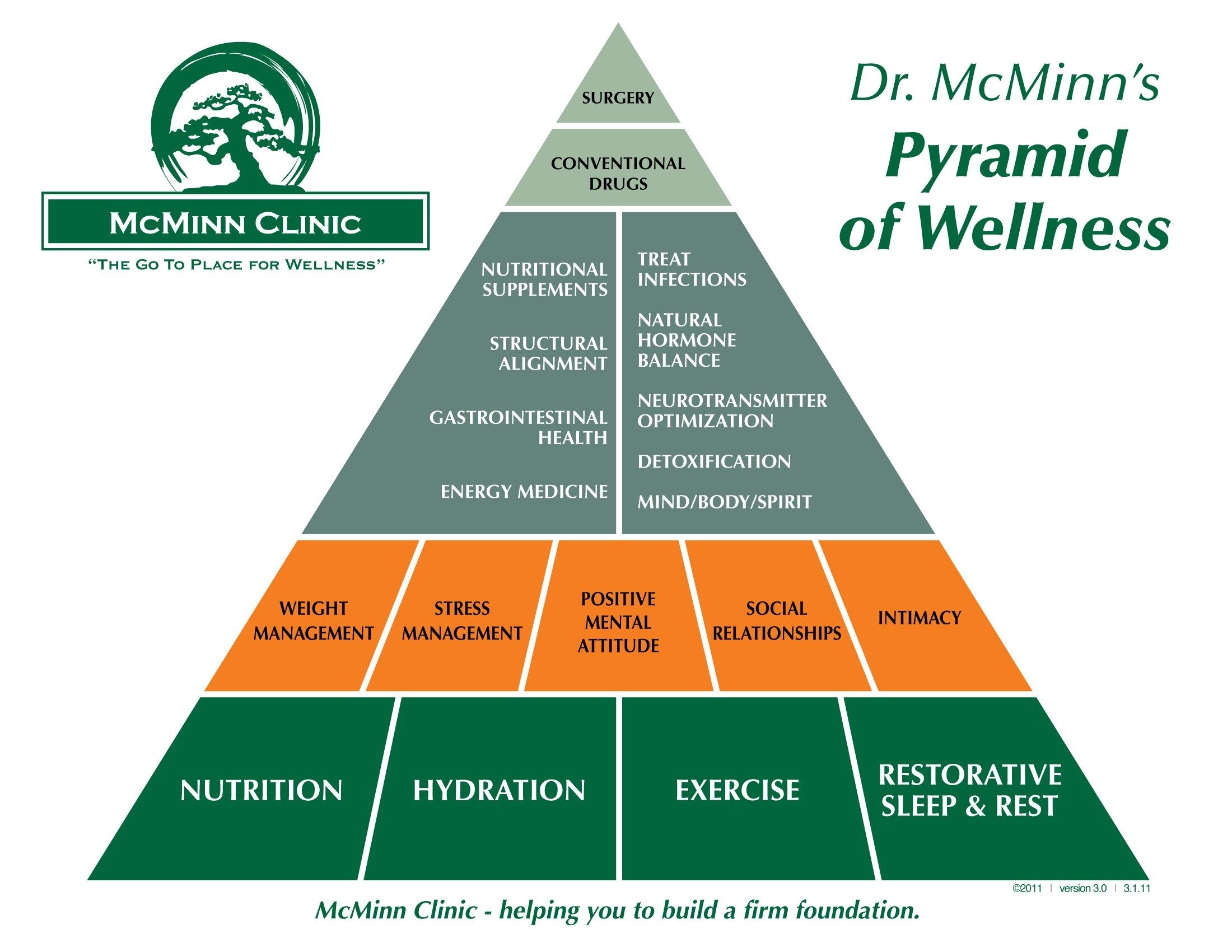
My general approach revolves around what I call the “Pyramid of Wellness (see below).” By building a firm foundation of our pyramid, we can often prevent the root causes of disease rather than just treating the superficial symptoms with drugs. Attention to the foundations of the pyramid forms a link in the chain of wellness that helps to make us whole, healthy, happy, and vibrant.

Gentlemen, this is a call to action for my fellow men-folk. Listen to your body. It is the precious vessel that is going to take you through this journey of life. The law of natural consequences says that if you take care of it, then you are much more likely to have a great trip. If you don’t then you will suffer the consequences and may have a very bumpy ride. Don’t wait until it’s too late. By the time you’re symptomatic, you’re well down the slippery slope of disease. You’re much better to be proactive and nip it in the bud.
Put down the cigarettes. Take off that spare tire. Get back in the gym. Stay away from junk food, and turn to wholesome nutrition. Do whatever it takes to get a good night’s sleep. Stay socially active, and intimately connected with your partner. Develop a plan for stress reduction. Turn your life around by starting your own personalized wellness program. For the rest of your life, you and those you love will reap the benefits.